Duy Tan University
Faculty of Nursing
Corrosion inhibition for biofuel using additives derived from Aganonerion polymorphum leaves
Posted On: 13/09/2023
Using readily available, low-cost raw materials, an anti-corrosion additive produced by domestic scientists has demonstrated the capability to mitigate engine corrosion, enabling the production of high-quality biofuels.
However, corrosion remains a major concern among users when using biofuels. It is also the primary cause of engine damage, degraded performance, and reduced lifespan. To minimize this phenomenon, applying corrosion inhibitors is one of the most flexible methods due to competitive costs, simple application, and zero disruption to the production and consumption of biofuels.
A variety of corrosion inhibitors have been developed and proposed to date, among which $\text{CeCl}_3$, $\text{Na(4-OHCin)}$, and $\text{Ce(4-OHCin)}_3$ are recognized as environmentally friendly inorganic inhibitors. Inhibitors act by increasing the polarization relationship between the anode and cathode, reducing ion diffusion to the metal surface, or raising the electrical resistance of the metal surface, thereby lowering the corrosion rate.
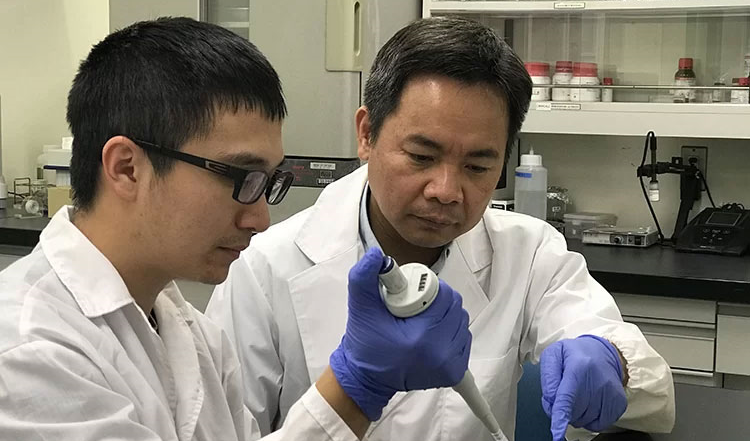
A research team led by Assoc. Prof. Dr. Nguyen Dang Nam from the Vietnam Petroleum Institute/PetroVietnam University successfully discovered, synthesized, and extracted corrosion inhibitors including $\text{CeCl}_3$, $\text{Na(4-OHCin)}$, $\text{Ce(4-OHCin)}_3$, and Aganonerium polymorphum leaf extract (APLE).
Through this study, the authors successfully synthesized and extracted these corrosion inhibitors via a novel approach aimed at enhancing the safe storage and transport of biofuels. These inhibitors control anodic, cathodic, and mixed anodic-cathodic processes without harming the environment or human health.
Electrochemical analyses—specifically potentiodynamic polarization and electrochemical impedance spectroscopy (EIS)—revealed that $\text{CeCl}_3$ exhibits properties of a cathodic inhibitor, $\text{Na(4-OHCin)}$ acts as an anodic inhibitor, while $\text{Ce(4-OHCin)}_3$ and APLE function as mixed-type anodic-cathodic inhibitors, all achieving high inhibition efficiency. Notably, the corrosion inhibitor derived from Aganonerium polymorphum leaf extract reached the highest inhibition efficiency at 93% at a concentration of 1000 ppm.
Surface characterization using Fourier-transform infrared spectroscopy (FTIR), scanning electron microscopy (SEM), and X-ray photoelectron spectroscopy (XPS) demonstrated that these compounds form a protective film on steel surfaces, thereby preventing steel corrosion in simulated biofuel environments. Additionally, 1000 ppm of APLE was blended into E5 gasoline to test motorcycle exhaust emissions in comparison with uninhibited E5 gasoline.
The results showed that adding 1000 ppm of APLE slightly reduced pollutant concentrations without affecting the combustion process of E5 gasoline. This opens up significant potential for utilizing Aganonerium polymorphum extract to curb corrosion and extend engine lifespan.
The project results carry practical significance in current conditions, opening avenues for producing novel, green, eco-friendly, and cost-effective corrosion inhibitors to promote and enhance biofuel utilization in Vietnam.
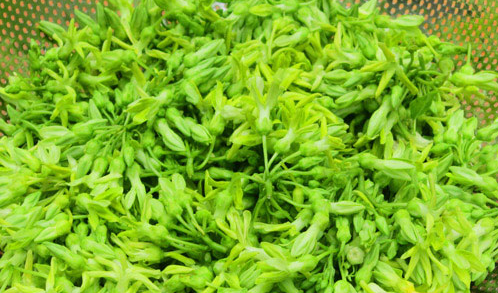
Aganonerium polymorphum (Lá giang) is a common, inexpensive vegetable in Vietnam.
Since Aganonerium polymorphum is a common, accessible, and non-toxic plant in Vietnam, it serves as a highly promising raw material for producing new anti-corrosion additives. However, to further improve the inhibition performance of APLE, additional research is required to remove chlorophyll and reduce the necessary inhibitor concentration.
The research group is currently exploring other native plant extracts as abundant domestic raw material sources that offer high protective efficiency and competitive pricing, aiming to create optimized and diversified biofuel additives before partnering with additive manufacturing enterprises.