Duy Tan University
Faculty of Nursing
Herbicidal compound discovered in fungus six times more potent than glyphosate
Posted On: 01/11/2024
Cordycepin Found in Cordyceps Mushroom Could Replace Commonly Used Glyphosate, Banned in Vietnam Since April 10, 2019
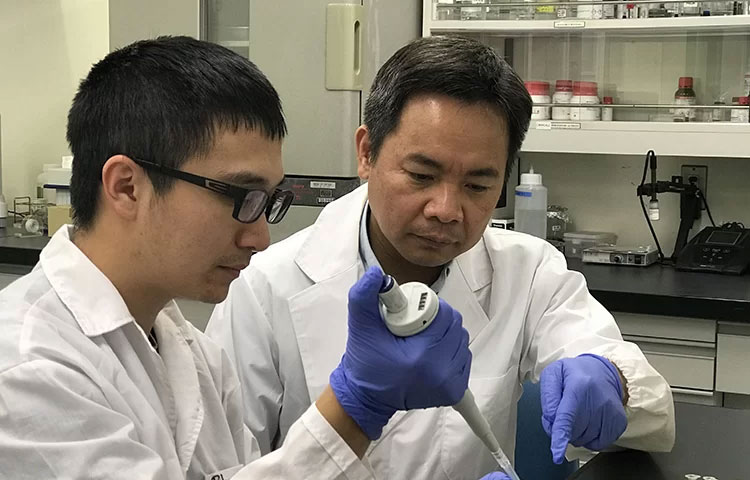
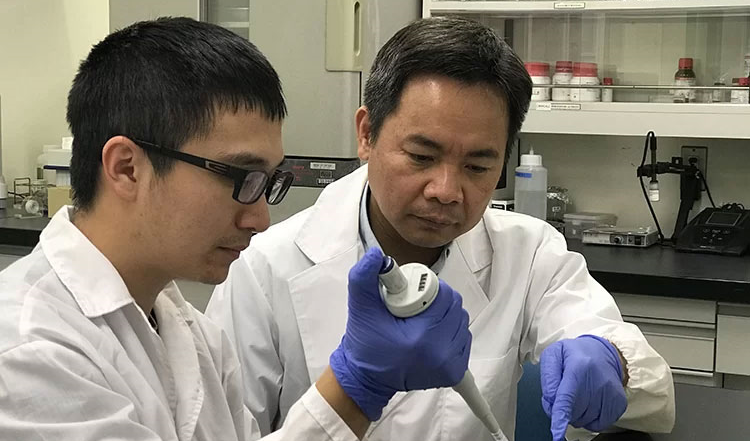
Assoc. Prof. Tran Dang Xuan (right) and his colleagues in the laboratory. Photo: Tran Ngoc Quy.
A research team led by Assoc. Prof. Tran Dang Xuan, Head of the Laboratory of Plant Physiology and Biochemistry at Hiroshima University (Japan), recently published a study in MDPI's international scientific journal Molecules on August 9, 2019. The study reveals that Cordycepin isolated from the Cordyceps militaris mushroom possesses superior new herbicidal properties. This discovery facilitates research into creating potential bio-herbicides. This is a breakthrough finding, as Cordycepin was previously known only as a compound capable of inhibiting cancer, diabetes, and several other human medical conditions.
After successfully isolating the compound using column chromatography, the scientists evaluated Cordycepin's cytotoxicity against Raphanus sativus (radish). The results showed that at a concentration of 0.04 mg/mL, Cordycepin's ability to inhibit germination and growth was 3.8 to 5.9 times higher than that of benzoic acid (a compound used as a herbicide). Cordycepin reduced chlorophyll and carotenoid levels while accelerating electrolyte leakage in radish plants. The findings indicate that Cordycepin is the primary plant growth inhibitor isolated from Cordyceps militaris, possessing outstanding herbicidal potential.
Currently, the market lacks natural herbicide products that offer higher efficacy than chemical herbicides. Most non-selective chemical herbicides harm the environment, particularly groundwater sources. Therefore, Cordycepin promises to contribute to the research and development of herbicides capable of controlling weeds and unwanted plants without harming beneficial crops—making it eco-friendly and advantageous for agricultural production.
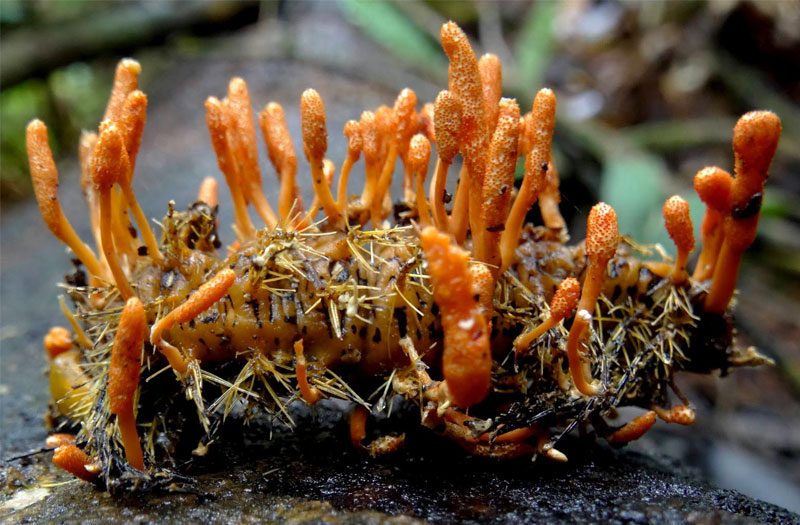
Cordyceps militaris mushroom.
In medicine, Cordyceps militaris (C. militaris) belongs to the Ascomycetes fungus family. In nature, C. militaris is found exclusively in the precious medicinal herb Cordyceps. This mushroom contains medicinal properties including anti-stress, anti-fatigue, antioxidant, and cancer cell inhibition. The fruiting body of C. militaris contains various active components such as cordycepin, adenosine, polysaccharides, fatty acids, amino acids, and other chemical constituents. Among them, cordycepin and adenosine display outstanding biological and pharmacological functions, such as anti-oxidation, anti-inflammation, and cancer cell inhibition.
The research team is currently conducting further studies on Cordycepin's herbicidal potential and its superiority over existing herbicides. Specifically, they aim to elucidate why this compound is safe for humans—capable of inhibiting cancer and diabetes—yet exhibits an activity up to 6 times higher than the herbicide Glyphosate.
Assoc. Prof. Tran Dang Xuan, German Prof. Rolf Teschke, and their research team believe that Cordycepin will serve as a foundation for global scientists to develop novel, highly safe herbicides for both human health and the environment. The research findings have been submitted to Hiroshima University to file for international and Japanese patents.
In practice, chemical herbicides currently used in the market not only pose severe risks to agricultural production but also significantly impact the surrounding environment. Recently, the Plant Protection Department issued a document banning herbicides containing Glyphosate from market circulation starting April 10, 2019. Glyphosate is a plant protection compound widely used around the world and in Vietnam; however, WHO warned in 2015 that it is a Group 2A carcinogen associated with blood, lung, and prostate cancers.
Other News
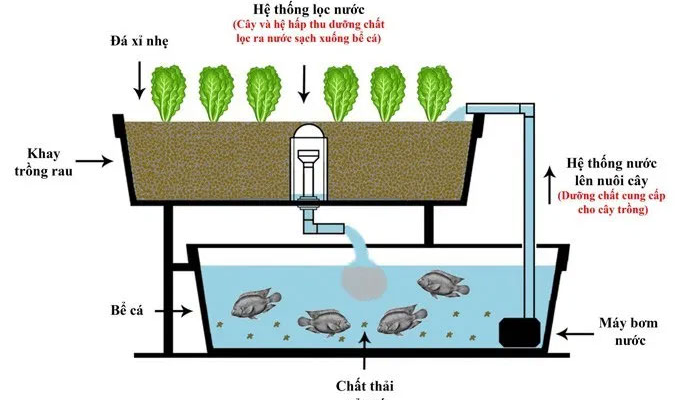
- Aquaponics Model: Combining Fish Farming with Hydroponics
- Indonesia Invents Device to Help Internet Addicts
- Cultivation and care techniques for Tonkin creeper flowers
- Corrosion inhibition for biofuel using additives derived from Aganonerion polymorphum leaves
- E5 Biofuel – What Makes the "Replacement" for A92 Gasoline Superior?